


AUD/USD weakens to near 0.6200 ahead of Chinese Services PMI release

 Trending Articles
- Bitcoin Drops to $70,000. U.S. Government Refuses to Bail Out Market, End of Bull Market or Golden Pit?
- Gold rallies further beyond $5,050 amid flight to safety, dovish Fed expectations
- Bitcoin Bottom Debate: $70,000 or $50,000?
- Bitcoin Slips Below 75,000 Mark. Will Strategy Change Its Mind and Sell?
- Bitcoin Rout. Bridgewater Founder Dalio Publicly Backs Gold.
- Ethereum Price Forecast: ETH faces heavy distribution as price slips below average cost basis of investors
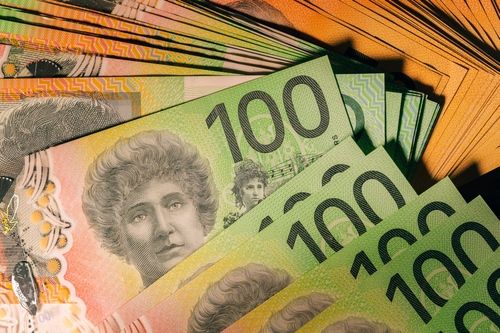
AUD/USD edges lower to 0.6210 in Monday’s early Asian session.
Fed officials said the job is not done on inflation.
The Aussie remains under pressure amid expectations of RBA rate cuts and Trump tariff threats.
The AUD/USD pair softens to near 0.6210 during the early Asian session on Monday. The rising bets that the Reserve Bank of Australia (RBA) will be compelled to start cutting interest rates exert some selling pressure on the Australian Dollar (AUD). The Chinese December Services Purchasing Managers Index (PMI) will be the highlight later on Monday.
After lowering its benchmark rate at three straight meetings, the US Federal Reserve (Fed) is anticipated to pause its easing cycle at the January meeting. Richmond Fed President Thomas Barkin noted on Friday that the Fed's benchmark policy rate should stay restrictive until it is more certain that inflation is returning to its 2% target. Meanwhile, Fed Governor Adriana Kugler and San Francisco Fed President Mary Daly emphasised the delicate balancing act facing US central bankers this year as they look to slow their pace of easing cycle.
Investors will closely monitor the US employment data for December, which is due later on Friday. This report could offer some hints about the Fed’s interest rate outlook in 2025. "Investors are going to want to see confirmation that labour trends remain solid, which means the economic outlook probably remains firm," noted Anthony Saglimbene, chief market strategist at Ameriprise Financial.
Australia’s November Consumer Price Index (CPI), released on Wednesday, will be in the spotlight. If the reading comes in below market expectations, this could trigger the chance of an RBA rate cut at its February meeting, weighing on the AUD. Additionally, the prospect of a trade war between the US and China could undermine the China-proxy Aussie, as China is a major trading partner for Australia.
Australian Dollar FAQs
One of the most significant factors for the Australian Dollar (AUD) is the level of interest rates set by the Reserve Bank of Australia (RBA). Because Australia is a resource-rich country another key driver is the price of its biggest export, Iron Ore. The health of the Chinese economy, its largest trading partner, is a factor, as well as inflation in Australia, its growth rate and Trade Balance. Market sentiment – whether investors are taking on more risky assets (risk-on) or seeking safe-havens (risk-off) – is also a factor, with risk-on positive for AUD.
The Reserve Bank of Australia (RBA) influences the Australian Dollar (AUD) by setting the level of interest rates that Australian banks can lend to each other. This influences the level of interest rates in the economy as a whole. The main goal of the RBA is to maintain a stable inflation rate of 2-3% by adjusting interest rates up or down. Relatively high interest rates compared to other major central banks support the AUD, and the opposite for relatively low. The RBA can also use quantitative easing and tightening to influence credit conditions, with the former AUD-negative and the latter AUD-positive.
China is Australia’s largest trading partner so the health of the Chinese economy is a major influence on the value of the Australian Dollar (AUD). When the Chinese economy is doing well it purchases more raw materials, goods and services from Australia, lifting demand for the AUD, and pushing up its value. The opposite is the case when the Chinese economy is not growing as fast as expected. Positive or negative surprises in Chinese growth data, therefore, often have a direct impact on the Australian Dollar and its pairs.
Iron Ore is Australia’s largest export, accounting for $118 billion a year according to data from 2021, with China as its primary destination. The price of Iron Ore, therefore, can be a driver of the Australian Dollar. Generally, if the price of Iron Ore rises, AUD also goes up, as aggregate demand for the currency increases. The opposite is the case if the price of Iron Ore falls. Higher Iron Ore prices also tend to result in a greater likelihood of a positive Trade Balance for Australia, which is also positive of the AUD.
The Trade Balance, which is the difference between what a country earns from its exports versus what it pays for its imports, is another factor that can influence the value of the Australian Dollar. If Australia produces highly sought after exports, then its currency will gain in value purely from the surplus demand created from foreign buyers seeking to purchase its exports versus what it spends to purchase imports. Therefore, a positive net Trade Balance strengthens the AUD, with the opposite effect if the Trade Balance is negative.
Read more
* The content presented above, whether from a third party or not, is considered as general advice only. This article should not be construed as containing investment advice, investment recommendations, an offer of or solicitation for any transactions in financial instruments.


