


Apple FY2025 Q2 Earnings Preview: Can It Thrive in a Trade War Storm?
TradingKey - As Apple ready to release its Q2 FY2025 earnings, the tech giant stands at a crossroads, navigating a landscape shaped by robust fundamentals, escalating trade tensions, and intensifying competition. With its iconic brand and formidable cash flow, Apple remains a cornerstone of the tech industry, yet tariff pressures and innovation challenges cast shadows over its growth trajectory.
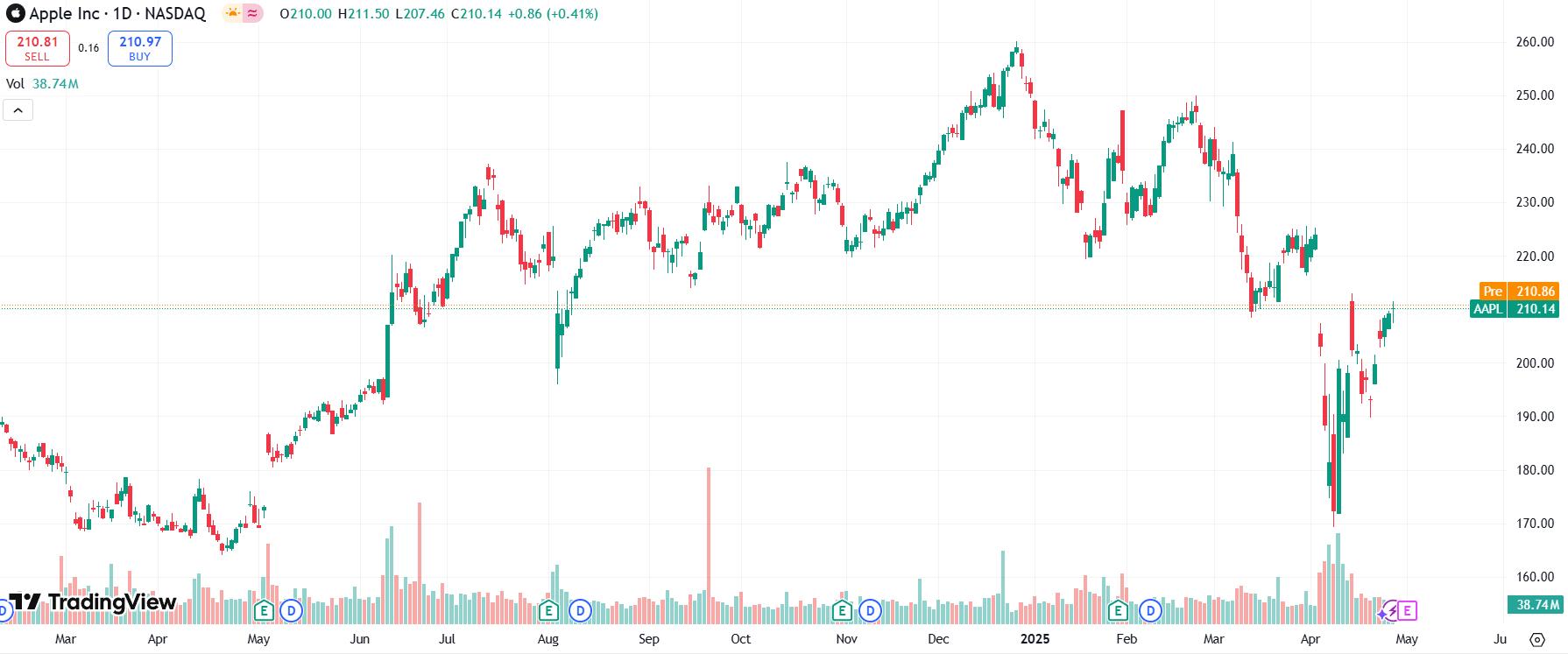
Source: Tradingview
Core Earnings Expectations and Outlook
For the second quarter of Apple’s 2025 fiscal year, market consensus projects a net income growth of approximately 2.5%, reaching $24.2 billion, with a slight uptick in gross margin to 47%. This reflects Apple’s enduring profitability despite a complex global market environment. However, Q3 gross margin is expected to dip to around 45% due to rising tariff pressures. EPS is forecasted at $1.60, up from $1.53 year-over-year, supported by Apple’s consistent track record of beating expectations over the past four quarters.
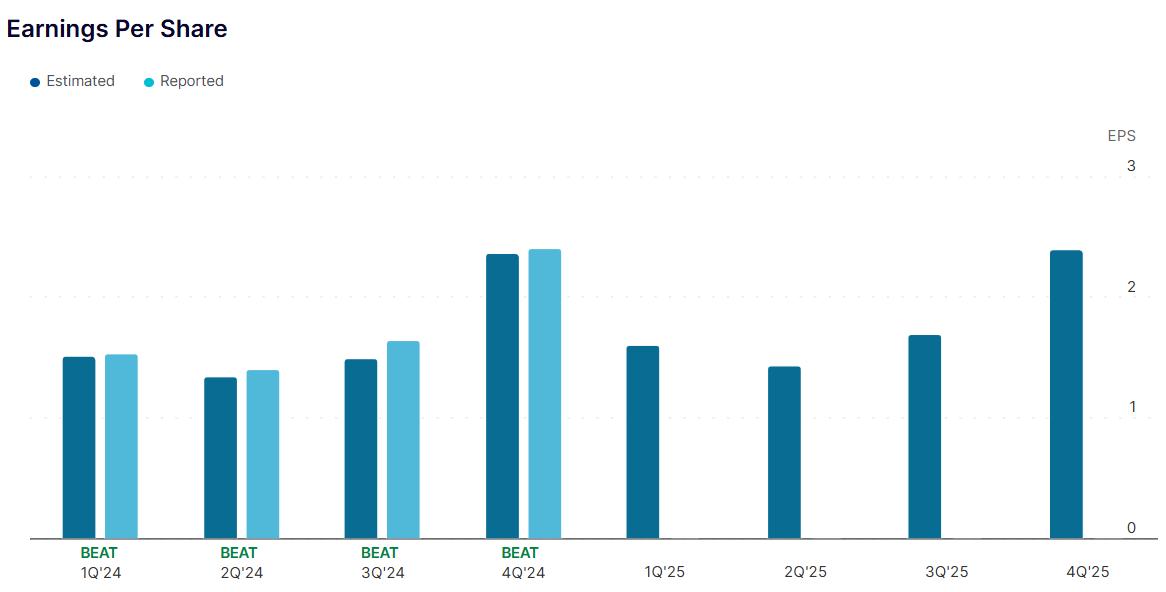
Source: Nasdaq
iPhone revenue, the backbone of Apple’s business, is expected to see a typical seasonal decline quarter-over-quarter but achieve modest year-over-year growth. The services segment, encompassing Apple Music, iCloud, and the App Store, is poised for continued double-digit growth of around 10%, solidifying its role as a stable revenue driver. New product releases, including the iPhone 16 series and M3-powered iPad Air, are expected to provide a modest boost, though their impact in Q2 remains limited.
Tariff Risks and Supply Chain Challenges
Tariffs have evolved from black swans to gray rhinos. With iPhones and other products manufactured in China facing tariffs ranging from 20% to 54%, and additional levies on production in Vietnam and India, Apple’s global supply chain costs are rising sharply.
To mitigate this, Apple has accelerated its supply chain diversification, particularly toward India, where it significantly increased inventory in first quarter. Notably, in March, Apple airlifted approximately 600 tons of iPhones and other products to the U.S. via at least five chartered flights, a move to preempt tariff-driven cost spikes and supply chain disruptions. This has led to short-term inventory buildup in the U.S.
The cost implications are stark. For instance, passing the full tariff burden onto consumers could push the iPhone 16’s base price up by over 40%. Yet, in a fiercely competitive smartphone market, Apple is unlikely to fully transfer these costs, risking profit margin compression. If prices remain unchanged, gross margins could face significant pressure, particularly from Q3 2025 onward.
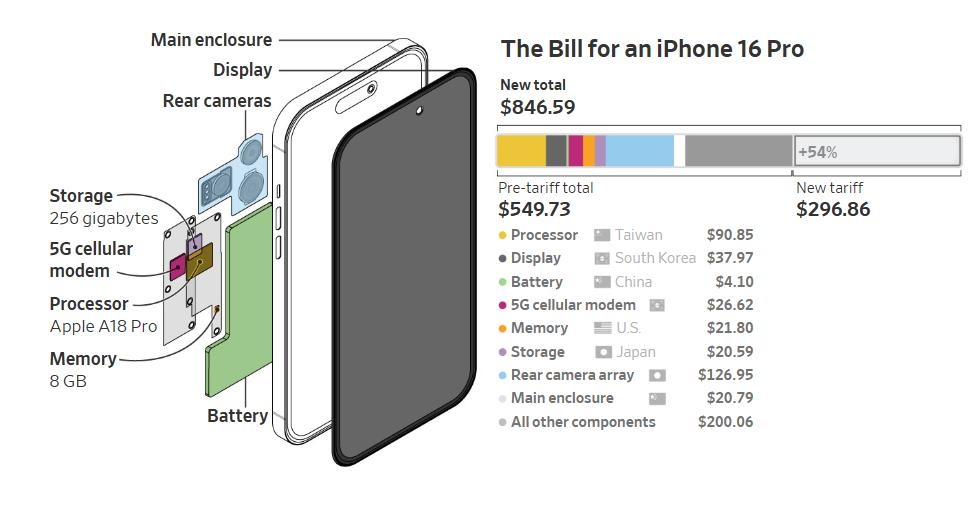
Source: Wall Street Journal
Apple’s supply chain strategy hinges on reducing reliance on China, which still hosts nearly half of its suppliers. India’s production capacity is expanding rapidly, projected to account for 20% of global iPhone output in 2025, but efficiency and yield rates lag behind China’s, and supporting infrastructure remains underdeveloped. Relocating production to the U.S. is even less viable, with labor costs potentially increasing by 30% and total manufacturing costs doubling when combined with tariffs. Thus, tariffs remain a core challenge, forcing Apple to balance cost control, pricing strategies, and supply chain adjustments to safeguard profitability.
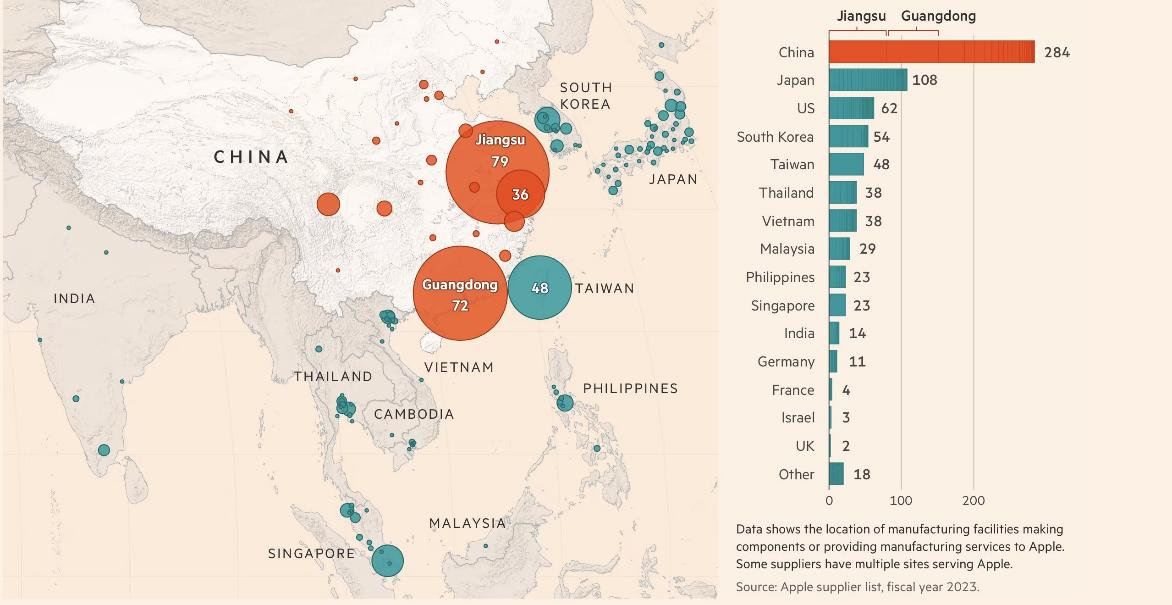
Source: Financial Times
Competitive Pressures and Innovation Hurdles
Apple’s dominance in China is under siege as local brands like Huawei, Xiaomi, and Honor leverage price advantages and rapid innovation to erode Apple’s market share. In Q1 2025, Apple’s shipments in China fell 8% to 12% year-over-year, reflecting a shrinking foothold. Extended consumer upgrade cycles and premium pricing further dampen iPhone sales growth.
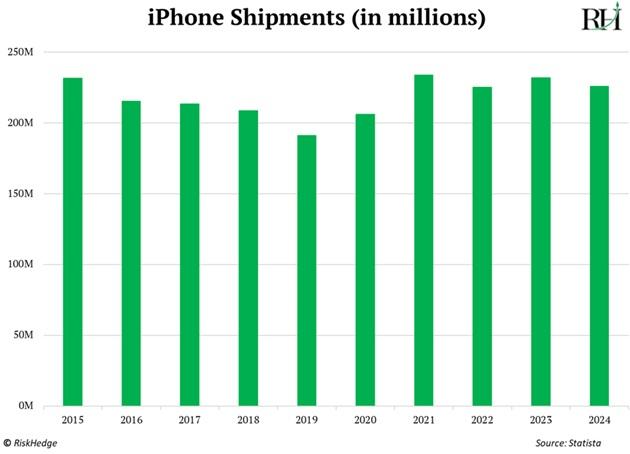
More importantly, Apple's pace of innovation has slowed significantly in recent years, and it lacks revolutionary products. Since the iPhone 11 in 2019, Apple has struggled to deliver groundbreaking products that reignite consumer enthusiasm. The iPhone 16 series, while improved, lacks standout features, with key AI capabilities like Apple Intelligence delayed in China, dimming its appeal. The upcoming iPhone SE4, despite incorporating Apple Intelligence, is viewed skeptically by markets, unlikely to reverse sales declines in the near term. While services maintain double-digit growth and steady cash flow, they cannot fully offset hardware slowdowns. Regulatory risks, including EU fines, further cloud Apple’s profit outlook.
Source: RiskHedge
Investment Outlook: Opportunity or Caution?
Apple’s Q2 FY2025 earnings are poised to deliver steady results, potentially exceeding expectations, driven by robust services growth and rebounding iPhone shipments, bolstered by India’s production ramp-up. However, tariff-driven cost pressures and an immature supply chain transition pose risks to margins in the coming quarters.
At a P/E ratio of 33, which is higher than the historical average level, Apple’s valuation reflects high market optimism, but mounting challenges, tariffs, competitive pressures in China, and innovation stagnation, introduce uncertainty. A more conservative valuation range of 25 to 30 times earnings suggests a more reasonable price of $185 to $220, balancing Apple’s strong cash flow and brand power with these headwinds.
In the short term, a strong Q2 report, particularly with clear management guidance on tariff mitigation and supply chain strategies, could lift market sentiment. Over the longer term, however, Apple’s stock may face volatility tied to global trade policies, supply chain progress, and its ability to reignite innovation. Investors should remain cautious, monitor earnings details, and avoid chasing highs, maintaining disciplined position sizing.
Recommended Articles


